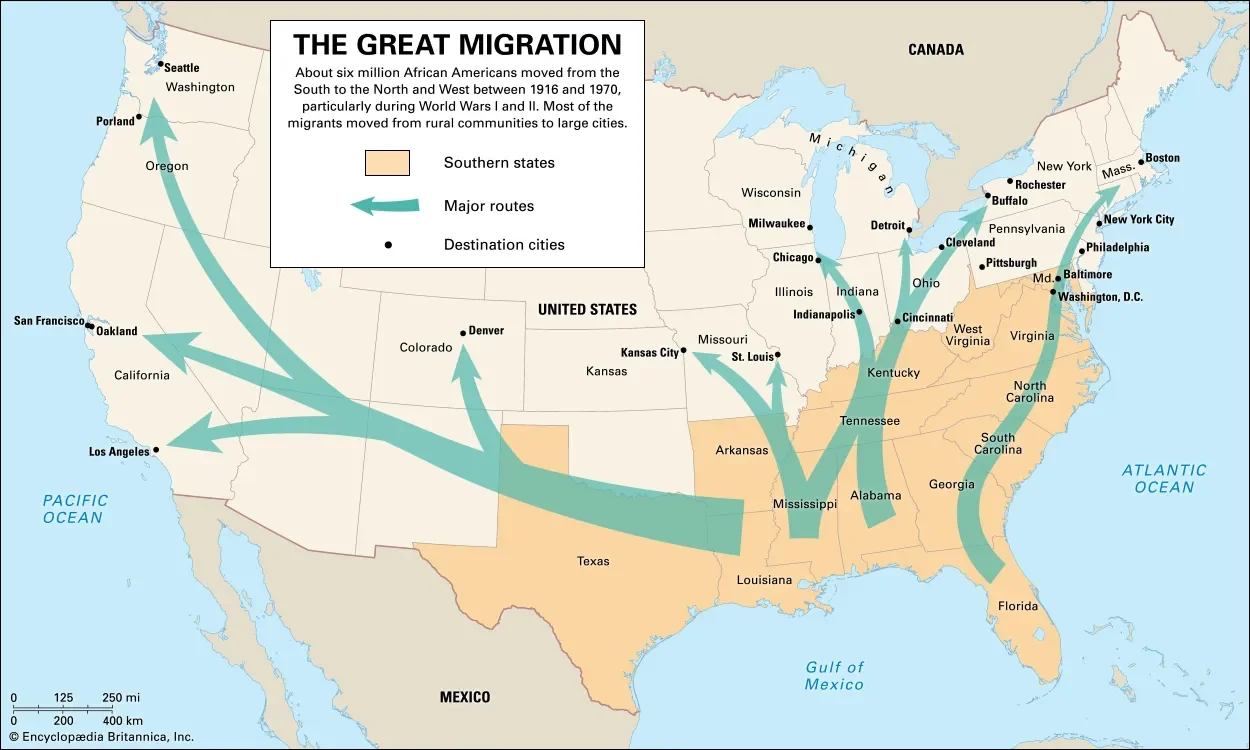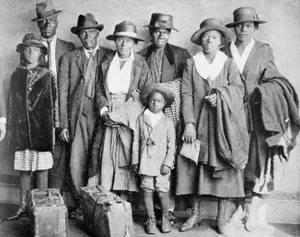
The Great Migration, sometimes known as the Great Northward Migration or the Black Migration, was the movement of five million African Americans out of the rural Southern United States to the urban Northeast, Midwest, and West between 1910 and 1970.[1] It was substantially caused by poor economic and social conditions due to prevalent racial segregation and discrimination in the Southern states where Jim Crow laws were upheld.[2][3] In particular, continued lynchings motivated a portion of the migrants, as African Americans searched for social reprieve. The historic change brought by the migration was amplified because the migrants, for the most part, moved to the then-largest cities in the United States (New York City, Chicago, Los Angeles, San Francisco, Philadelphia, Detroit, Cleveland, and Washington, D.C.) at a time when those cities had a central cultural, social, political, and economic influence over the United States; there, African Americans established culturally influential communities of their own.[4] According to Isabel Wilkerson, despite the losses they felt leaving their homes in the South, and despite the barriers that the migrants faced in their new homes, the migration was an act of individual and collective agency, which changed the course of American history, a "declaration of independence" that was written by their actions.[5]